Entry-level welders earn $40,000-$50,000 annually. Experienced welders with certifications pull $60,000-$80,000. Specialized welders in underwater, pipeline, or aerospace work? $100,000-$200,000+. That's six-figure income without a college diploma.
Here's exactly how to become a welder in 2026, what it costs, how long it takes, and what you'll actually earn.
What Welders Actually Do
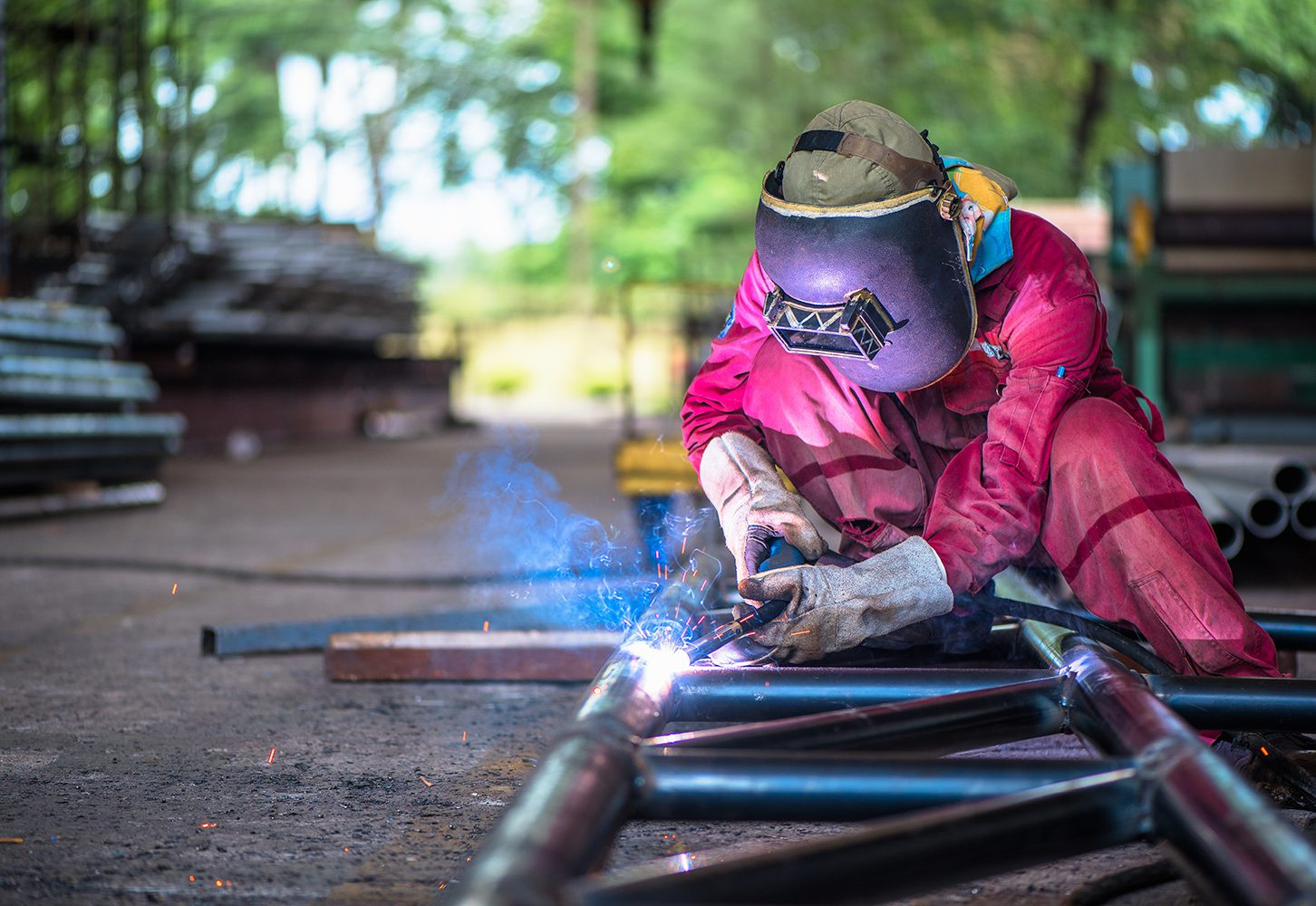
Welders join metal parts together using heat and specialized equipment. Sounds simple, but the applications are everywhere.
You might work in manufacturing, building car frames or heavy equipment. Construction welders work on bridges, buildings, and infrastructure projects. Pipeline welders travel to remote locations for high-paying contract work. Underwater welders combine commercial diving with welding for offshore oil rigs and marine repairs.
The work environment varies drastically. Some welders work in climate-controlled shops. Others work outdoors in all weather conditions. Pipeline and traveling welders live on the road for weeks at a time but earn premium rates. Underwater welders face physically demanding, dangerous work—and get paid accordingly.
Training Paths: How to Get Started
You've got several options for learning welding. Which path you choose depends on your timeline, budget, and career goals.
Vocational/Trade Schools
Most welding programs run 6-12 months and cost $5,000-$15,000. You'll learn multiple welding processes: stick (SMAW), MIG (GMAW), TIG (GTAW), and flux-cored . Also blueprint reading, metallurgy basics, and safety protocols.
Timeline: 6-12 months full-time
Cost: $5,000-$15,000
Result: Certificate of completion, ready for entry-level work
Community College Programs
Two-year associate degree programs offer more comprehensive training including advanced certifications and general education courses. Cost runs $6,000-$20,000 depending on state and residency.
Timeline: 2 years
Cost: $6,000-$20,000
Result: Associate degree, multiple certifications
Apprenticeships
Union or non-union apprenticeships combine on-the-job training with classroom instruction. You earn while you learn , starting around $15-$20/hour and increasing as you progress. Programs typically last 3-4 years.
Timeline: 3-4 years
Cost: Free (you get paid)
Result: Journeyman certification, years of experience
Online and Hybrid Training
Virtual welding simulators and online theory courses let you start learning basics before hands-on training. The Blue Collar Recruiter's Virtual Trade School offers foundational welding training you can complete on your schedule, then transition to hands-on certification testing.
Timeline: 3-6 months (flexible)
Cost: Typically $3,000-$6,000
Result: Foundational knowledge, ready for certification testing
The fastest path to employment? Vocational school for 6-9 months, get your basic certifications, start working, then pursue advanced certifications while earning.
Certifications That Matter
Basic certifications from the American Welding Society (AWS) prove you can perform specific weld types and positions. Most employers require at least one or two AWS certifications for entry-level positions.
Common AWS certifications:
- Certified Welder (CW): Basic certification for specific processes and positions
- Certified Welding Inspector (CWI): Advanced certification for quality control roles
- 6G certification: All-position pipe welding (required for pipeline work)
Certification testing costs $500-$1,500 per test depending on the process and position. You'll need to renew certifications every 6 months to 3 years depending on the type.
Specialized certifications boost earning potential significantly. Underwater welding requires commercial diving certification plus welding certs—total training costs $15,000-$40,000 but leads to $100,000+ salaries. Aerospace welding certifications demand extreme precision but unlock jobs paying $70,000-$100,000+.
What You'll Actually Earn
Entry-level welders with basic certifications start around $16-$22/hour ($35,000-$45,000 annually). Not amazing, but you're earning from day one while your college friends are still in class.
Experienced welders with 3-5 years and multiple certifications earn $25-$35/hour ($55,000-$75,000 annually). Work overtime and you're easily clearing $65,000-$85,000.
Specialized welders see dramatic pay increases:
Pipeline welders: $30-$60/hour ($80,000-$150,000+ with overtime and per diem)
Underwater welders: $50-$100/hour ($100,000-$200,000+ annually)
Aerospace welders: $30-$45/hour ($65,000-$95,000 annually)
Welding inspectors: $60,000-$90,000 annually (less physical, more technical)
Business ownership changes the game completely. Welding contractors and shop owners regularly earn $100,000-$300,000+ annually once established.
Job Outlook: Will There Be Work?
According to the Bureau of Labor Statistics, welding jobs are projected to grow 3% through 2032. That's about average, but here's what the numbers don't show: massive retirements creating opportunities.
More than half of current welders are over 45 years old. As they retire, demand for young welders intensifies. Infrastructure investments require welders. Manufacturing reshoring brings jobs back to the US. Renewable energy projects need welders for wind turbines and solar installations.
Translation: If you can weld and show up on time, you'll have work. Companies are desperate for reliable, skilled welders.
Getting Hired: What Employers Want
Technical skill matters, but it's not everything. Employers consistently say they struggle to find welders who:
Show up on time and pass drug tests. Sounds basic, but this eliminates surprising numbers of applicants.
Can read blueprints and work independently. They need welders who understand specs and don't require constant supervision.
Have valid certifications. Don't let certs expire. Companies won't hire you if certifications lapsed.
Demonstrate quality work. Bring a portfolio of weld samples or photos of previous work to interviews.
BC Recruits connects trained welders with companies actively hiring across skilled trades. We work with manufacturers, construction companies, and specialty welding shops nationwide.
Start Your Welding Career Today
Welding offers a clear path to solid income without college debt. The training takes months, not years. The jobs are there. The pay is competitive. And the career progression is straightforward ! Get certified, gain experience, specialize, potentially start your own business.
Ready to start? Contact BC Recruits to discuss welding career opportunities and training options. We'll help you find the right path whether you're just starting or looking to advance your welding career.
Want to explore other skilled trades? The Blue Collar Recruiter offers training and career guidance across HVAC, plumbing, electrical, and more high-demand trades.
2026 Update: Welding demand remains strong in construction, infrastructure, and energy projects. See our apprenticeship pay guide or browse current welding job openings hiring now.