Welding Jobs in Dallas-Fort Worth, TX
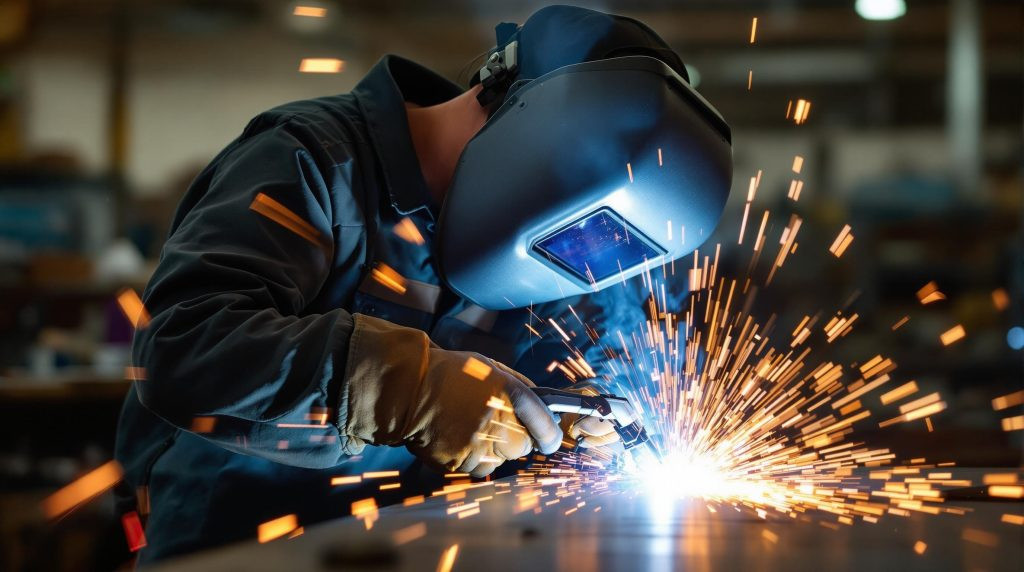
DFW is running three welding-heavy build cycles at once. Hyperscale data center and semiconductor campuses are stacking up structural steel and process piping across the northern suburbs, Fort Worth's aerospace corridor keeps Lockheed Martin, Bell and their supplier base running precision welding lines around the clock, and the metro's ongoing distribution and manufacturing buildout keeps fabrication shops backed up on structural and pipe work.
Blue Collar Recruits connects welders across the Metroplex with employers hiring structural, pipe, pressure and precision welders. This page covers the certifications that actually gate work here, which segment pays best, and how to get hired faster in a market with three distinct welding economies running side by side.
Texas Does Not License Welders. Certifications Do the Gating.
Texas has no state welding license, so nothing stops you from calling yourself a welder. What actually gates the work is process and position certification through the American Welding Society, tested employer by employer and project by project.
The certifications that open the most doors in DFW:
- AWS D1.1 — structural steel, the baseline for commercial and data center construction welding.
- ASME Section IX — pressure welding, required for boiler, process piping and industrial mechanical work.
- API 1104 — pipeline welding, tied to the region's energy infrastructure work.
- AWS D17.1 — aerospace welding, the credential Fort Worth's aviation and defense suppliers screen on first.
Certifications are typically process and position specific, meaning a 6G pipe certification does not automatically cover flat-position plate work. Employers will test you on their own procedure, so keep your certifications current and be ready to weld a test coupon at the interview. For a broader view of which credentials move pay fastest across trades, see our essential certifications guide.
Three Welding Economies, One Metro
Unlike a single-industry welding market, DFW runs three parallel demand centers that rarely compete for the same welder.
Data center and semiconductor construction across Collin, Denton and northern Dallas counties needs structural steel welders for building frames and pipe welders for the process piping, chilled water loops and fire suppression systems inside. This work runs on multi-year build schedules, which means steadier demand than a typical construction cycle.
Fort Worth's aerospace and defense corridor needs precision welders certified on aluminum and titanium for airframe and component work. This segment pays a premium for AWS D17.1 and typically requires a background check given the defense contracts involved.
General fabrication and structural steel across the metro's distribution and manufacturing base is the highest-volume, most accessible segment, and the fastest entry point for a welder building certifications toward the higher-paying aerospace or process piping lanes.
Semiconductor fabrication buildout adds a fourth, smaller lane worth naming separately: cleanroom-adjacent mechanical and process piping work tied to chip fabrication support facilities, which demands tight-tolerance orbital and TIG pipe welding on stainless systems. It pays close to the aerospace tier and is growing fastest of any segment in the northern suburbs right now.
Welding Roles Hiring Across the Metroplex
- Structural welders on commercial, data center and industrial construction
- Pipe welders on process piping, mechanical rooms and plant work
- Pressure welders on boiler and ASME Section IX code work
- Aerospace and precision welders on aluminum and titanium components
- Fabrication shop welders building structural and custom components
- Robotic and automated welding technicians running and tending cells
- Welding inspectors, the clearest path off the torch and into a CWI career
What Actually Moves the Needle on Pay
Process and position. TIG and pipe welding in out-of-position work (5G, 6G) pay well above flat-position MIG or stick work. Aerospace TIG on exotic alloys pays highest of all.
Certification stack. A welder holding D1.1, ASME Section IX and D17.1 simultaneously qualifies for all three of the metro's demand centers instead of one, and can move between them as work shifts.
Put in real terms: an entry-level D1.1 structural welder on a general fabrication job typically starts well below a D17.1-certified aerospace welder running TIG on titanium components for a Fort Worth defense supplier, and both sit below a shutdown-certified pipe welder pulling per diem on a turnaround. The certification stack, not tenure alone, is what moves a welder between these tiers.
Shutdown and travel work. Industrial shutdown and turnaround welding pays a heavy premium with per diem, though it is intermittent by nature.
Security clearance eligibility. Defense-adjacent aerospace welding in Fort Worth pays more to welders who can pass a background check, since it widens which programs they can staff.
Union versus non-union. Some structural and pipeline welding in this market runs union scale. Our union versus non-union breakdown covers the tradeoffs. For the full trade comparison, see our roundup of the highest-paying blue-collar careers.
Getting Hired Faster in DFW
- Lead with your certification list by process and position, not a general "certified welder" claim.
- Bring your certification documentation and be ready to weld a test coupon. Most DFW employers test before hiring regardless of paperwork.
- Say which of the three segments you want: data center and structural, aerospace and precision, or pipe and pressure. Naming one speeds up matching.
- Keep OSHA 10 current for site access on any commercial or industrial job.
- If you are targeting aerospace work, confirm you can pass a background check before applying, since it is a hard requirement on most defense-adjacent postings.
A job seeker profile puts your certifications and process list in front of DFW employers before a posting even goes live.
Where the Work Is Across the Metroplex
Data center and semiconductor construction concentrates north of Dallas through Collin and Denton counties. Aerospace and defense welding centers on Fort Worth's west side around the Lockheed Martin and Bell campuses. General fabrication and structural steel work is spread metro-wide, with concentration along the I-35 and I-20 industrial corridors.
Commute planning matters more in this market than most welders assume. A structural welder living in south Fort Worth commuting to a data center job north of Dallas is looking at over an hour each way in traffic, which is a real cost against take-home pay. Ask where a shop's current jobs actually run before accepting an offer, not just where the shop's office sits.
Credentials Worth Stacking
- AWS D1.1 structural steel certification, the entry point for construction welding
- ASME Section IX for pressure and process piping work
- AWS D17.1 for aerospace and precision alloy work
- CWI (Certified Welding Inspector), the clearest path to a supervisory or inspection career
- OSHA 10 or OSHA 30 for commercial and industrial site access
The Blue Collar Recruiter courses and our career path overview lay out the sequence in order of return.
DFW Welding Jobs: Frequently Asked Questions
Do I need a state license to weld in Texas?
No. Texas has no state welding license. Employers hire and test based on AWS process and position certifications instead.
Which welding certification pays the most in DFW?
Aerospace-qualified TIG welders certified under AWS D17.1 for Fort Worth's aviation and defense suppliers typically command the highest rates, followed by out-of-position pipe welders certified under ASME Section IX.
Can one welder work data center, aerospace and pipe jobs?
Yes, if certified across the relevant processes and positions. Many DFW welders stack D1.1, Section IX and D17.1 specifically to move between the metro's three demand centers as work shifts.
What is driving welding demand in DFW right now?
Hyperscale data center and semiconductor construction, Fort Worth's aerospace and defense manufacturing base, and the metro's ongoing industrial and distribution buildout.
Will I have to weld a test at the interview?
Almost always. Most DFW employers test on their own procedure regardless of certification paperwork, so keep your skills sharp on the processes you list.
Do I need a four-year degree to become a welder in DFW?
No. Most DFW welders enter through a trade school welding program or a direct apprenticeship with a fabrication shop, typically six months to two years before reaching certifiable skill.
Hiring Welders in DFW?
Three separate welding economies are competing for the same certified pool in this metro, and the employers who staff successfully are specific about which processes and positions they need instead of posting a generic "welder wanted" ad.
Post your DFW welding opening to reach certified welders already searching inside the trades.
When you need to reach welders who are working and not looking, the TBCR Hiring System combines headhunting, outreach and candidate qualification to surface people who are not browsing job boards, without traditional placement fees.
EXPLORE THE TBCR HIRING SYSTEM
More for DFW Tradespeople
HVAC Jobs in Dallas-Fort Worth, TX
Electrician Jobs in Dallas, TX
Plumber Jobs in Dallas-Fort Worth, TX
Essential Certifications to Boost Your Blue-Collar Career
Top 5 Highest-Paying Blue-Collar Careers
Union vs Non Union: Which Pays More
Trades Interview Questions You Will Actually Get Asked
How to Negotiate Better Rates With Industrial Clients
Start Your DFW Welding Job Search
Whether you are D1.1 certified and ready for structural work, chasing an aerospace certification for Fort Worth's defense suppliers, or building toward your CWI, this metro is running three welding economies that all need certified hands right now.